8 Reasons Why Pure Essential Oils Are More Expensive, It Involves Extensive Research
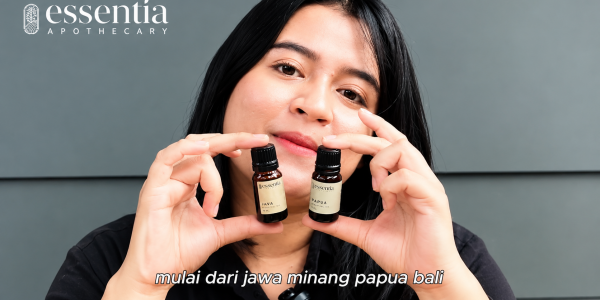
Behind a single bottle of high-quality essential oil lies an extensive process—ranging from raw material selection, extraction, and formulation to scent research, quality control, and packaging.
The more rigorous the process undertaken to preserve the scent's character and quality, the higher the cost required to produce the final product.
For Essentia Apothecary, essential oils are more than just fragrance products. Through our EthnoWellness collection in particular, we use scent as a medium to reintroduce the richness of Indonesia. Read on to discover why pure essential oils come at a higher price point.
1. Essential Oils Require Large Quantities of Plant Material
One of the primary reasons pure essential oils command a higher price is that the oil yield from plants is not always high.
This means a significant amount of plant material is required to produce a relatively small quantity of oil. Furthermore, every plant possesses unique characteristics and varying yield rates.
Consequently, the contents of an essential oil bottle cannot be equated to standard fragrance products, which can be manufactured using controlled amounts of synthetic fragrance ingredients.
The lower the oil yield obtained from the plant material, the higher the value of the raw material itself.
2. The Extraction Process Determines the Oil's Character
Essential oils are derived from aromatic plant parts such as flowers, leaves, bark, wood, seeds, or other botanical elements.
Obtaining the aromatic oil requires an extraction process tailored to the specific characteristics of the raw material.
This process demands careful attention to various factors, as the processing method can significantly influence the oil's final scent and character.
3. Not All Ingredients Can Be Used in Equal Quantities
In essential oil formulation, every ingredient possesses distinct characteristics.
Some scents are incredibly potent, requiring only a small amount in the composition. Others have a more subtle aroma, necessitating a different proportion to achieve the desired character.
4. Research and Development Costs Lie Behind Every Scent
This is the aspect often unseen when consumers simply view a bottle on the shelf. Before a scent becomes a finished product, a research and development (R&D) process is required to define its character, experiment with various combinations, and conduct evaluations until the ideal formulation is achieved.
For the EthnoWellness line specifically, the development process goes beyond simply asking whether a scent smells pleasant.
We also explore how a scent can embody the character of a specific region and deliver an experience that resonates within the context of modern wellness.
5. EthnoWellness Requires Specialized Research
EthnoWellness is one of the collections at Essentia Apothecary that undergoes a unique development process.
We offer 15 EthnoWellness variants inspired by diverse regions across Indonesia, including Java, Papua, Minang, Bali, and others.
Each variant requires its own distinct process of exploring scent characteristics and developing a formulation.
Consequently, we are not merely creating 15 different scents.
We aim for each scent to possess a story and identity that invites users to rediscover the richness of Indonesia's olfactory heritage.
6. Quality Control Is Also Part of Production Costs
Products based on natural ingredients demand a focus on consistency and quality.
Every stage—from raw materials to the final product—undergoes inspection and control processes to ensure the item reaching the consumer meets established standards.
Quality control is a production step often unseen by consumers, yet it remains a crucial component in determining a product's cost.
7. Essential Oil Production Cannot Always Be Scaled Up Massively
Products crafted with meticulous attention to raw materials and specific formulations cannot always be manufactured like mass-market goods.
When production occurs on a smaller scale, the cost per unit tends to be higher; this is because the expenses associated with research, formulation, production, packaging, and quality control must be allocated across a smaller volume of products.
This is one of the factors that causes the price of artisanal or specially developed products to differ from that of mass-produced fragrances. 8. Packaging Must Also Protect the Product Inside
Packaging for essential oils must take into account product protection, ease of use, storage, and compatibility with the characteristics of the essential oil.
Consequently, the cost of a product stems not only from the contents of the bottle but also from the packaging system used to safeguard the product until it reaches the consumer.
15 Scents, One Story About Indonesia
Indonesia is a land of extraordinary natural and cultural richness.
Through EthnoWellness, Essentia Apothecary seeks to bring a glimpse of that richness into everyday olfactory experiences.
Java, Papua, Minang, Bali, and various other regions have inspired our journey to explore the scents of Indonesia.
For us, each bottle represents more than just the fragrance released when the cap is opened.
There is an extensive process behind it—research, formulation, and exploration. And above all, there is a deep love for Indonesia.